Pan

OVERVIEW

Pan is a mobile accessibility project designed to support users with Autism Spectrum Disorder (ASD) while navigating train stations. Developed as an assistive and guidance-oriented experience, the project combines interface design and augmented reality elements to reduce uncertainty in complex public environments and support users throughout their journey. The system focuses on clarity, reassurance, and ease of interaction, aiming to make station navigation more understandable and less stressful.

The project was developed in two distinct phases. The first phase, originally developed under the name TrainAR, focused on technological research and experimentation, leading the team to test and validate a functional software prototype based on augmented reality navigation. The second phase expanded the project into a broader service experience, concentrating on interaction design, interface structure, and user support systems.

YEAR

YEAR

2021

2021

2021

2021

TYPE

UX/UI Design
AR Development

ROLE

ROLE

Service Designer
UX/UI designer

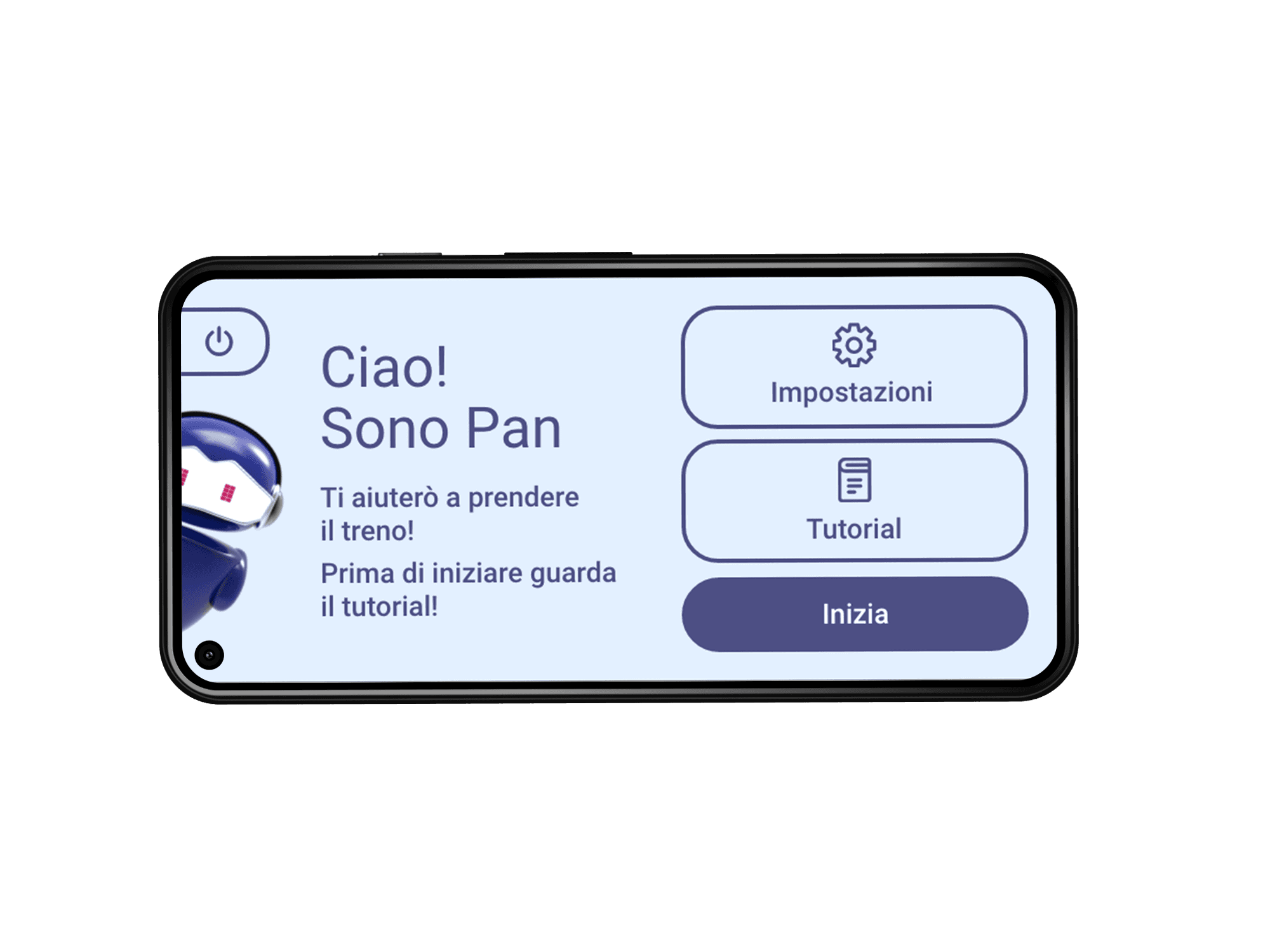
Pan, originally conceived as a small robot, takes on in its final service form the “non-form” of a small, highly expressive slime. This choice allows its shape to adapt fluidly to different contexts within the application’s interface, while primarily serving (like all other elements) to reassure the user through a soft aesthetic language and calming color palette.

Pan, originally conceived as a small robot, takes on in its final service form the “non-form” of a small, highly expressive slime. This choice allows its shape to adapt fluidly to different contexts within the application’s interface, while primarily serving (like all other elements) to reassure the user through a soft aesthetic language and calming color palette.

About the project

The project addresses the cognitive and sensory difficulties that crowded transit environments can generate for users with ASD, particularly in situations that require orientation, decision-making, and rapid interpretation of information. Starting from the analysis of user needs and contextual constraints, the design defines a mobile experience centred on guided navigation and continuous support.

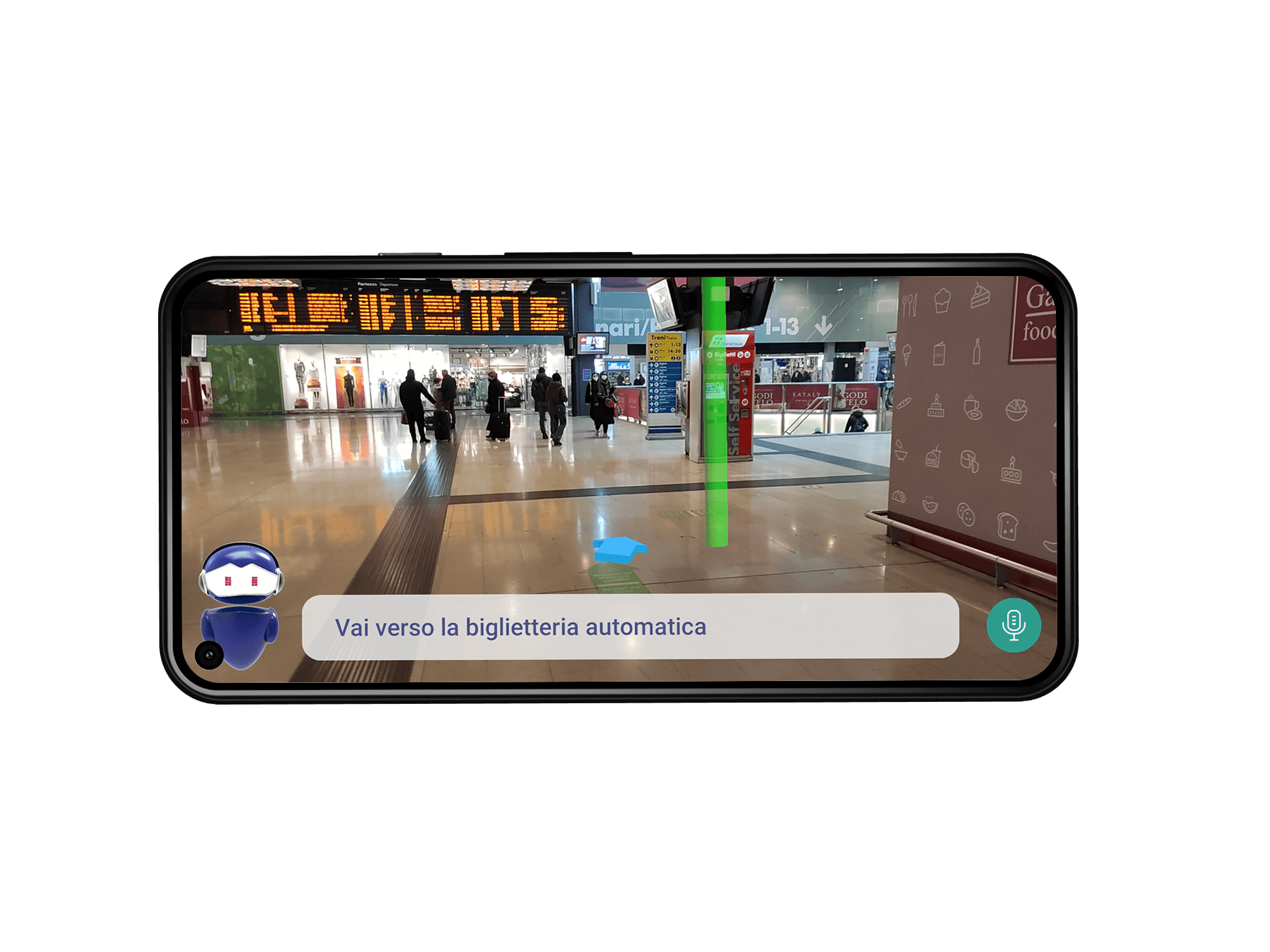
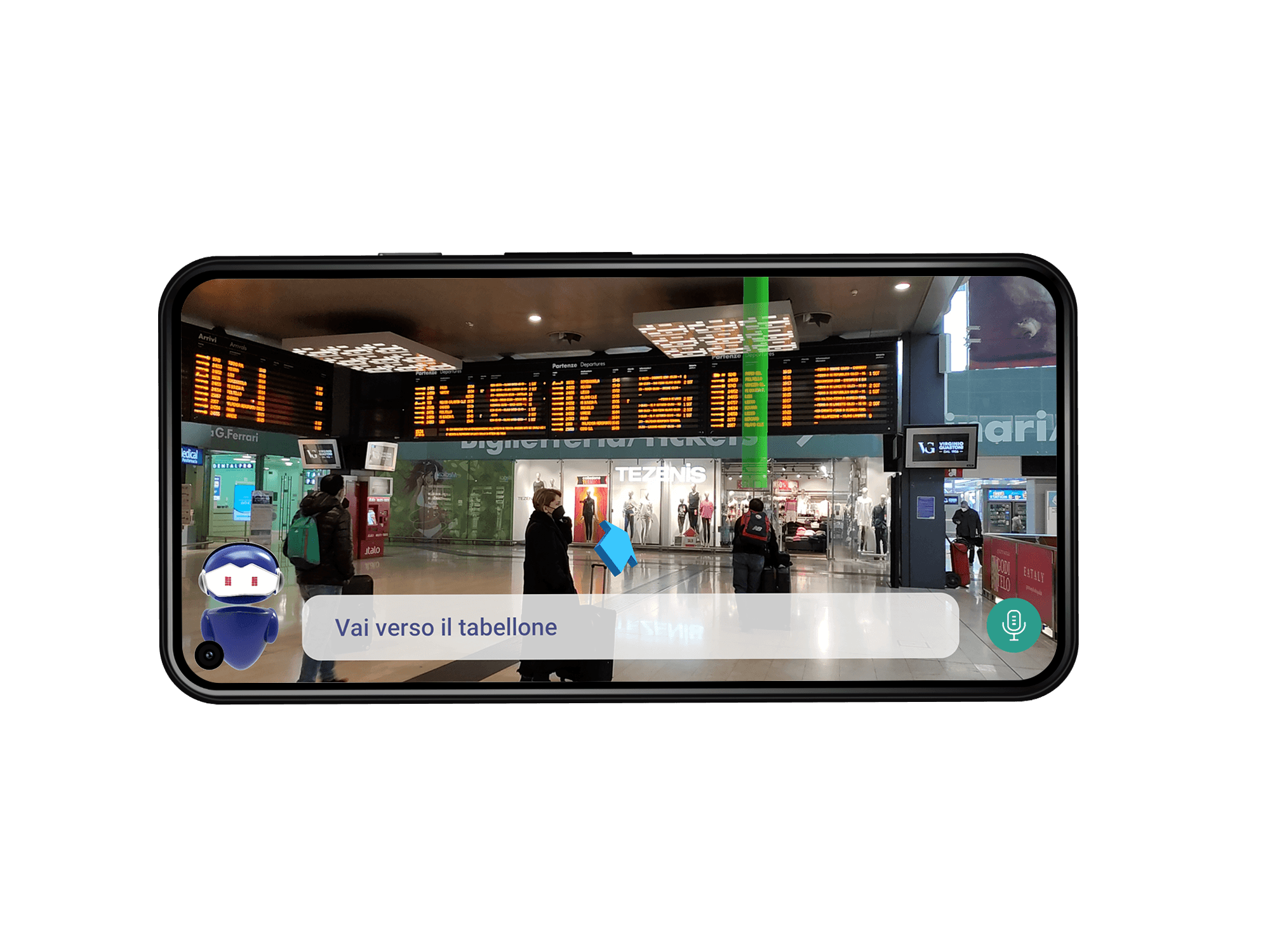
The application uses augmented reality cues and directional indicators to help users move through station spaces more intuitively, overlaying guidance information directly onto the surrounding environment. Alongside navigation features, the system integrates customizable interaction settings, allowing users to adapt aspects such as voice guidance, response modes, and visual aids according to personal preferences and comfort levels.

A key component of the experience is the presence of Pan, the assistant integrated into the interface, conceived to provide continuity and reassurance during the interaction flow. Rather than functioning purely as a navigation utility, the application is designed as a supportive companion intended to reduce feelings of disorientation and help users maintain a sense of control throughout the journey.

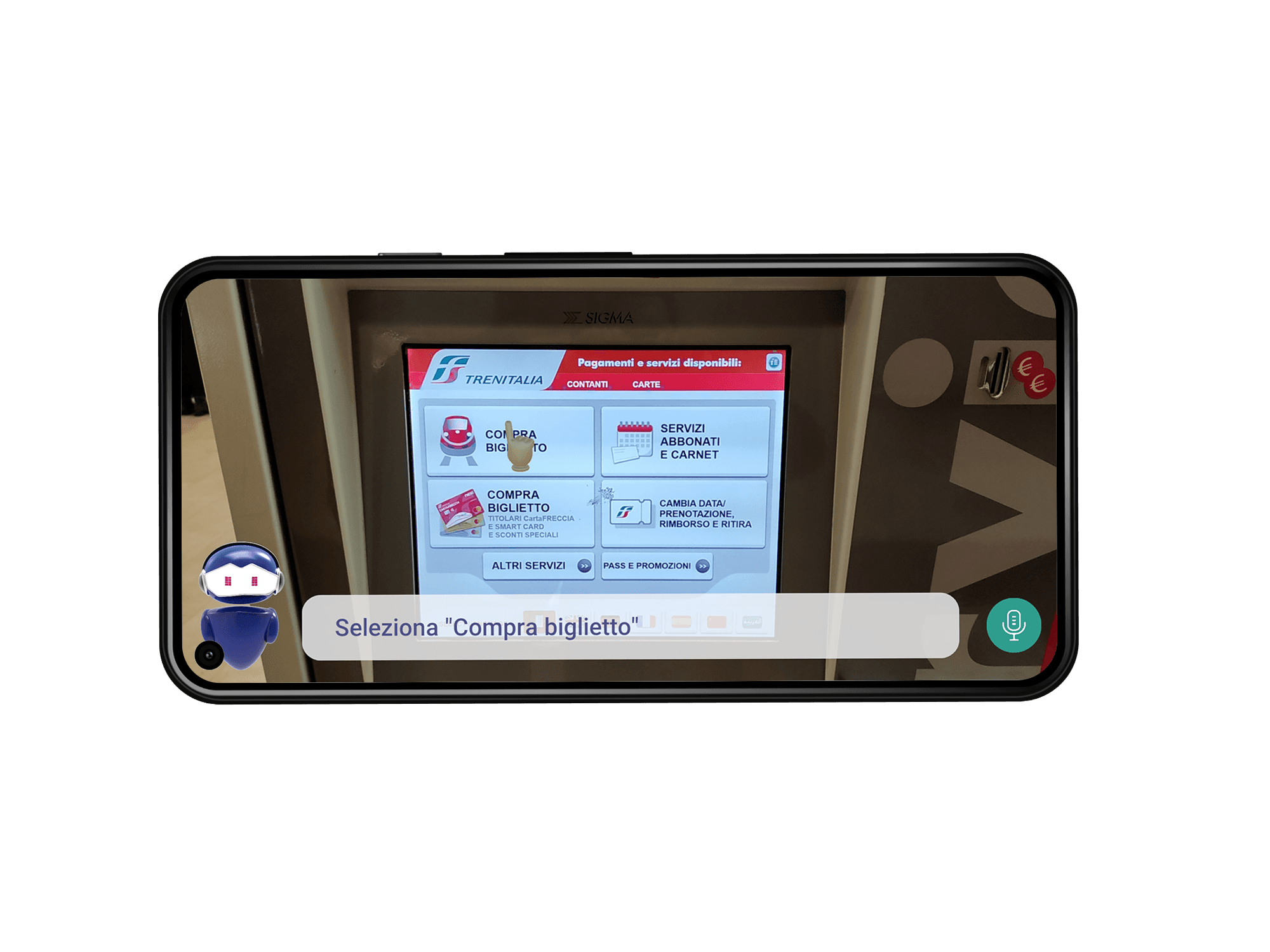
The first phase of the project focused on field testing and the validation of user-specific navigation routes built around augmented reality guidance. The service was designed to accompany users throughout the entire station experience—from ticket purchase to platform identification and train boarding—providing continuous support at each step of the journey.

The first phase of the project focused on field testing and the validation of user-specific navigation routes built around augmented reality guidance. The service was designed to accompany users throughout the entire station experience—from ticket purchase to platform identification and train boarding—providing continuous support at each step of the journey.

The project’s initial stage allowed for a more flexible experimentation process centred on the testing and integration of the underlying technologies, helping define the technical foundations of the final service experience.

The project’s initial stage allowed for a more flexible experimentation process centred on the testing and integration of the underlying technologies, helping define the technical foundations of the final service experience.

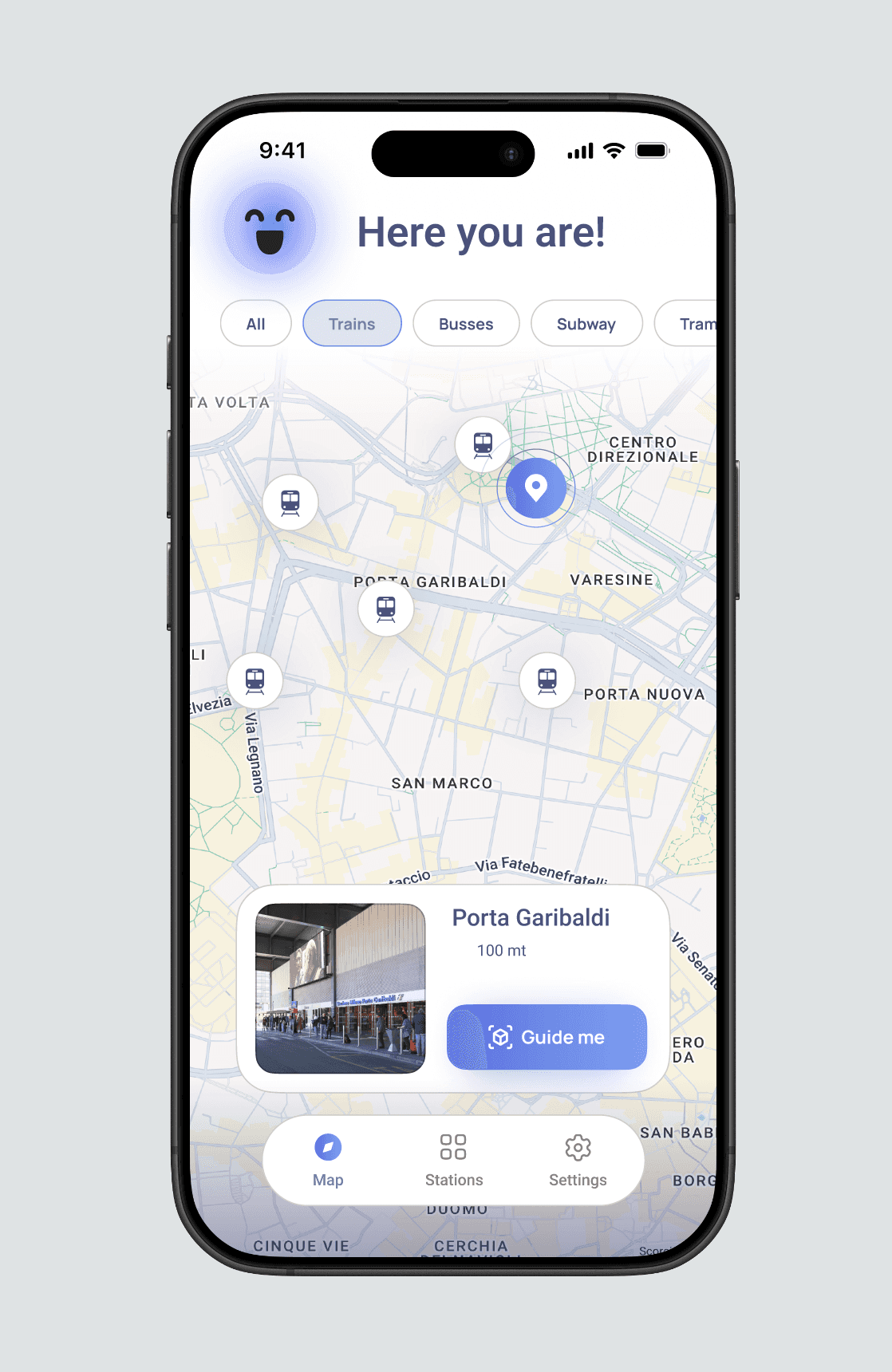
The second phase of the project introduced a radical transformation of the user experience and interface structure. The home screen is centred around a live map view featuring Pan, the assistant mascot, which provides feedback once the GPS connection is established. Depending on the user’s location, contextual cards allow quick access to navigation towards the nearest station.

The second phase of the project introduced a radical transformation of the user experience and interface structure. The home screen is centred around a live map view featuring Pan, the assistant mascot, which provides feedback once the GPS connection is established. Depending on the user’s location, contextual cards allow quick access to navigation towards the nearest station.

From this point onward, the experience is designed to minimize cognitive load as much as possible. Pan remains constantly available and autonomously guides the user through each step of the journey. The mascot itself is interactive, revealing a voice interaction feature that users can activate whenever additional assistance is needed.

From this point onward, the experience is designed to minimize cognitive load as much as possible. Pan remains constantly available and autonomously guides the user through each step of the journey. The mascot itself is interactive, revealing a voice interaction feature that users can activate whenever additional assistance is needed.