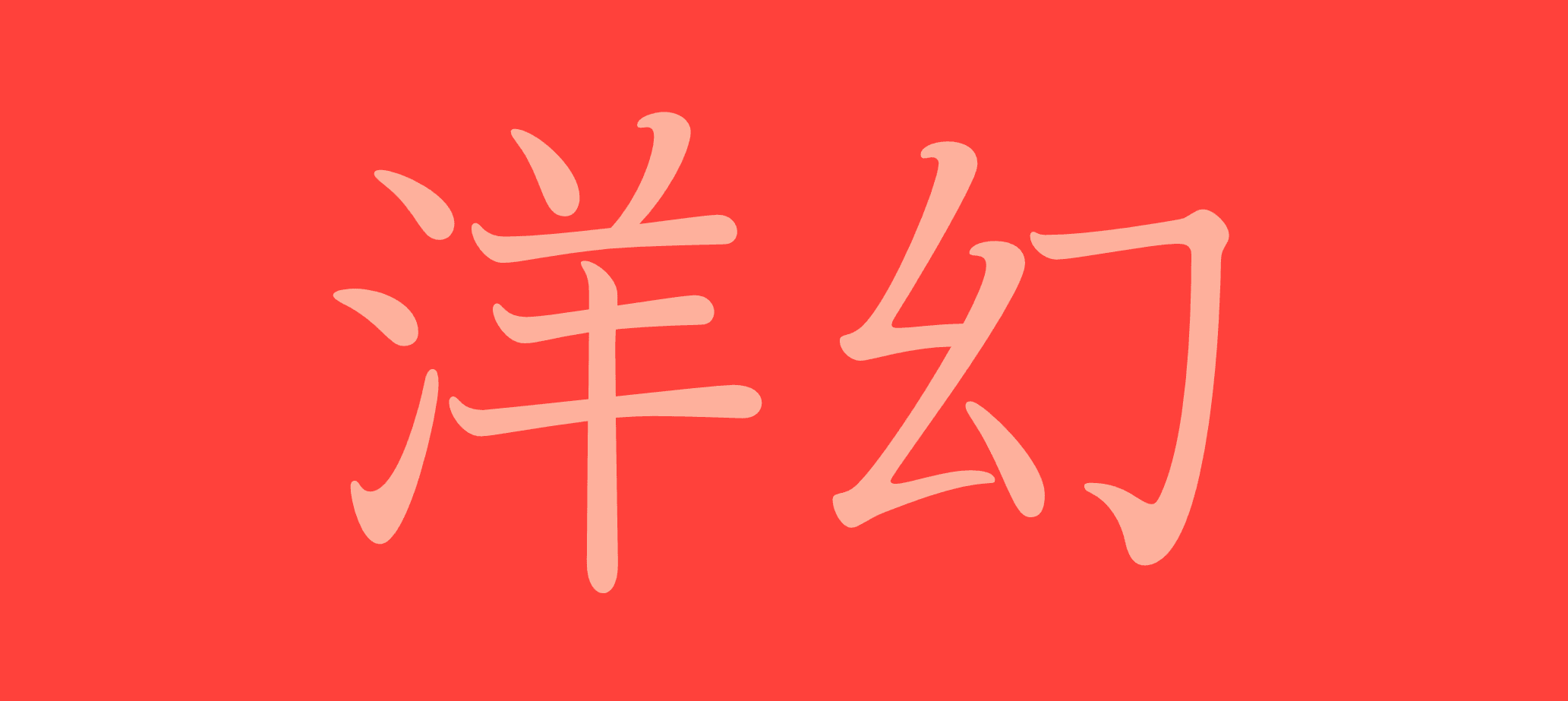
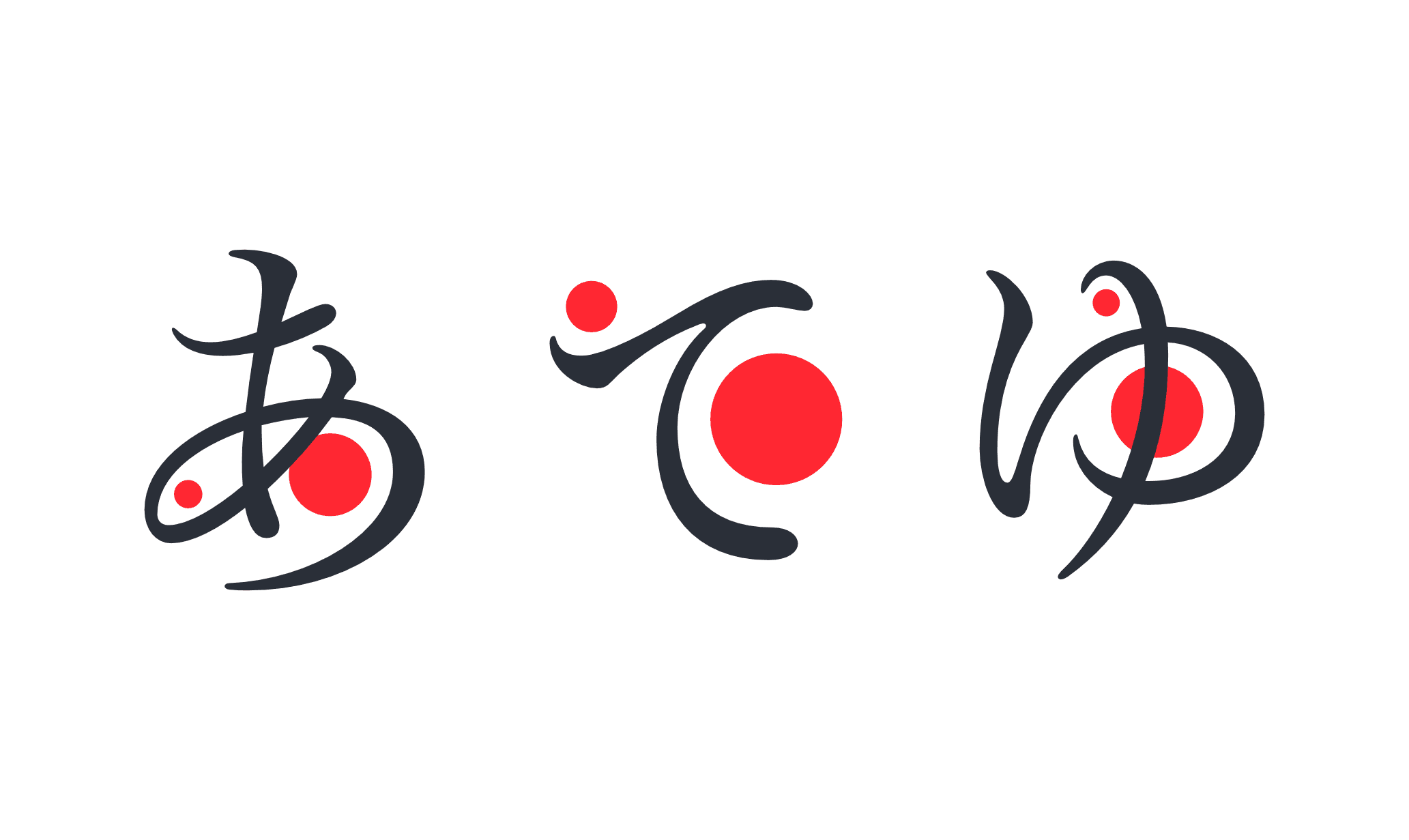
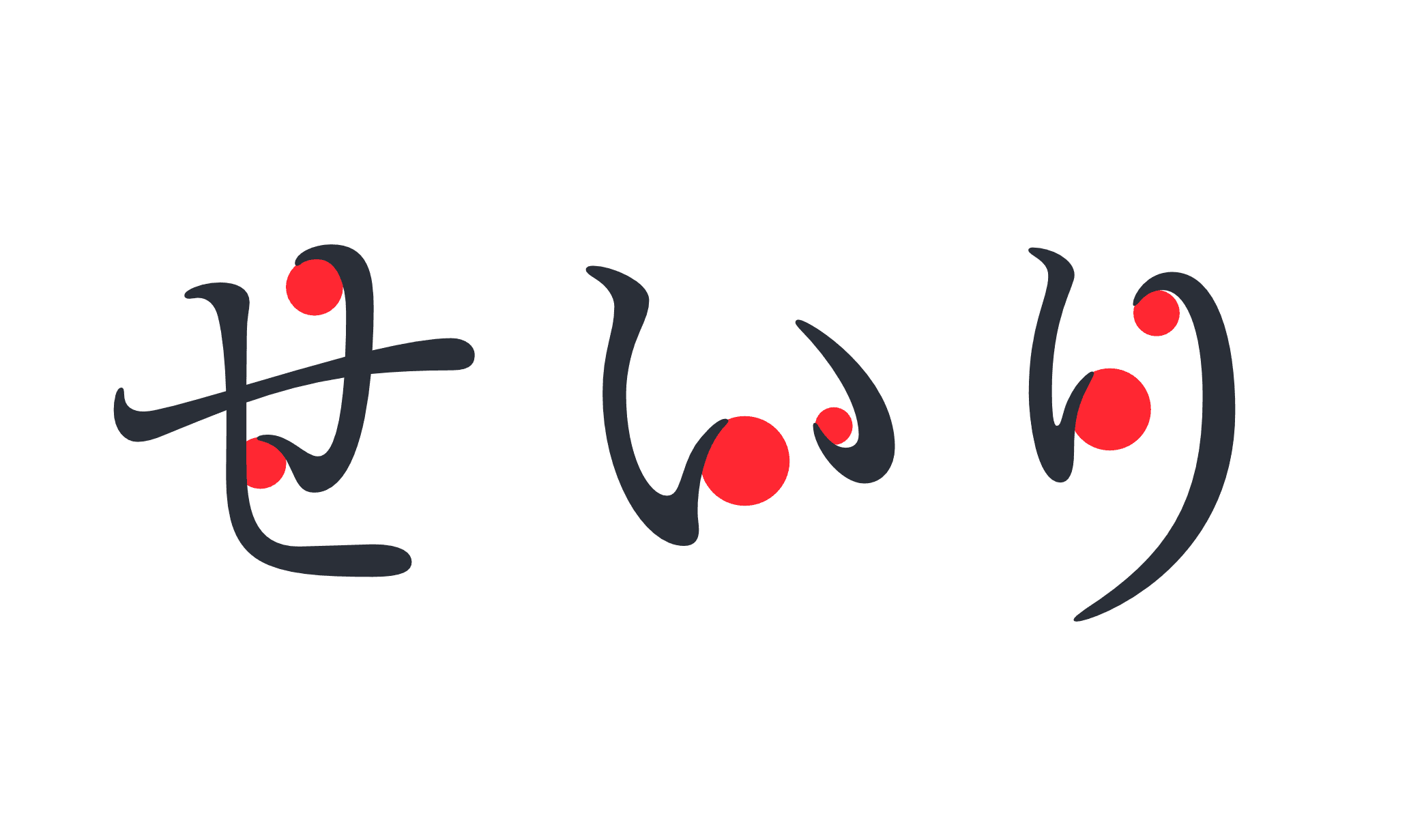
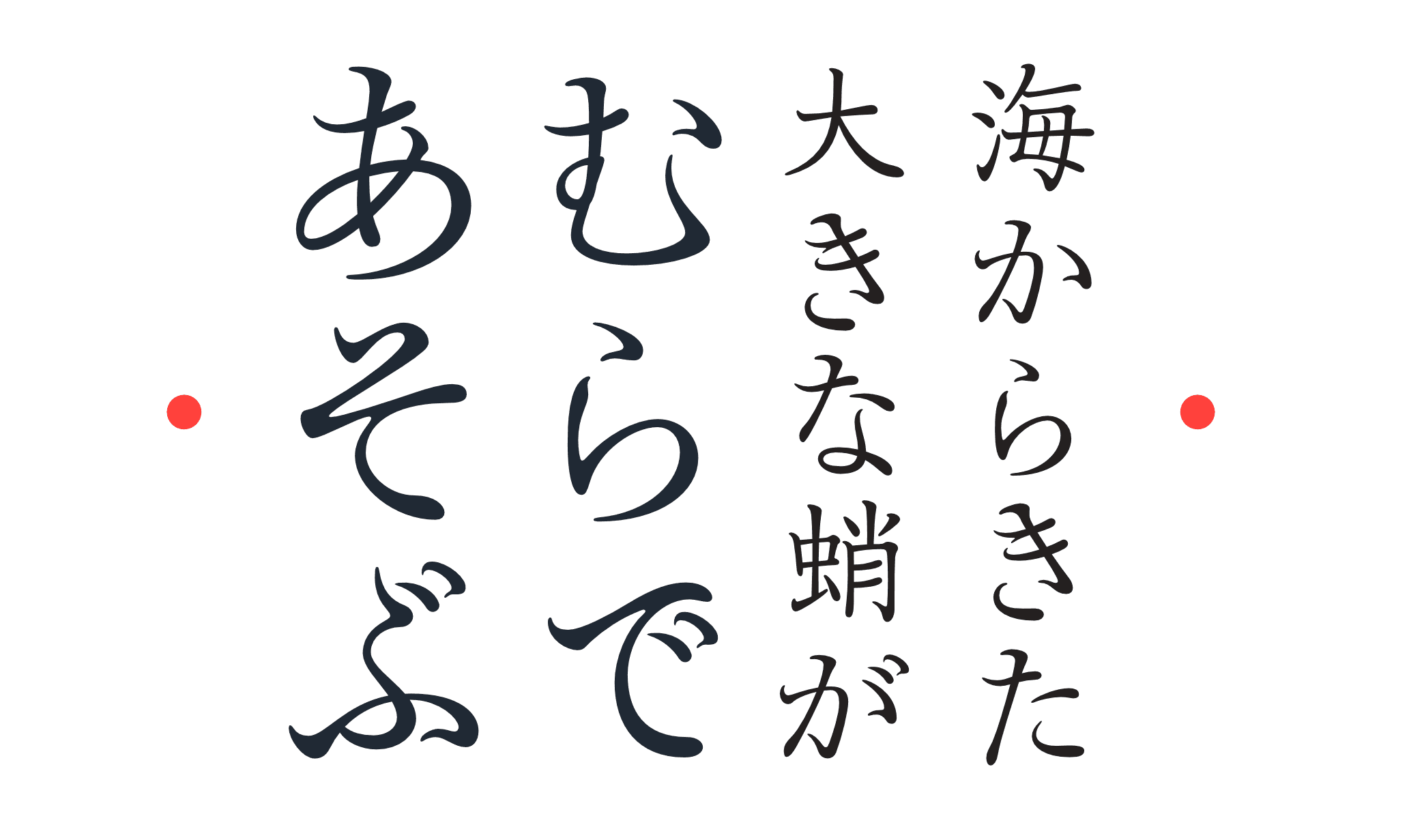
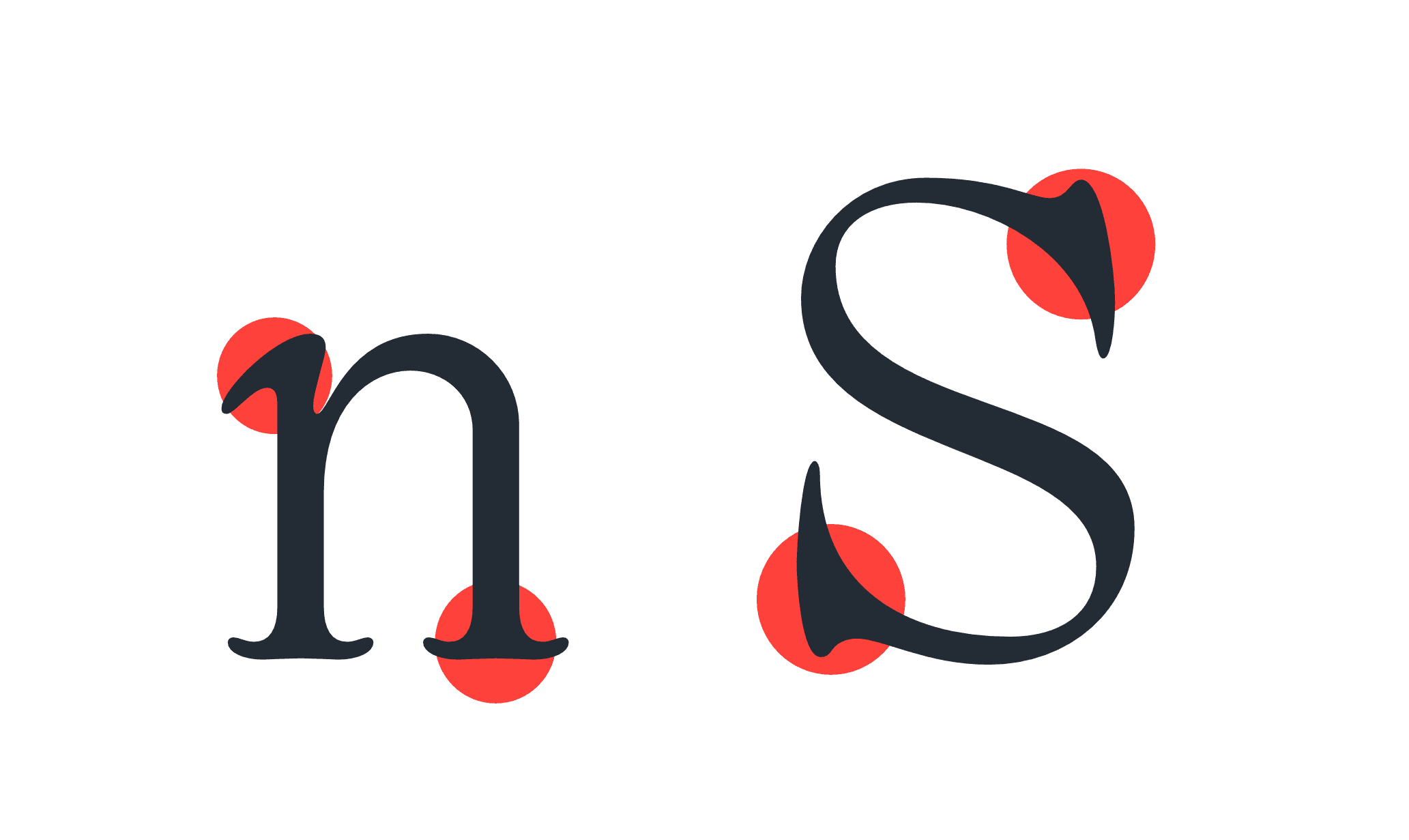
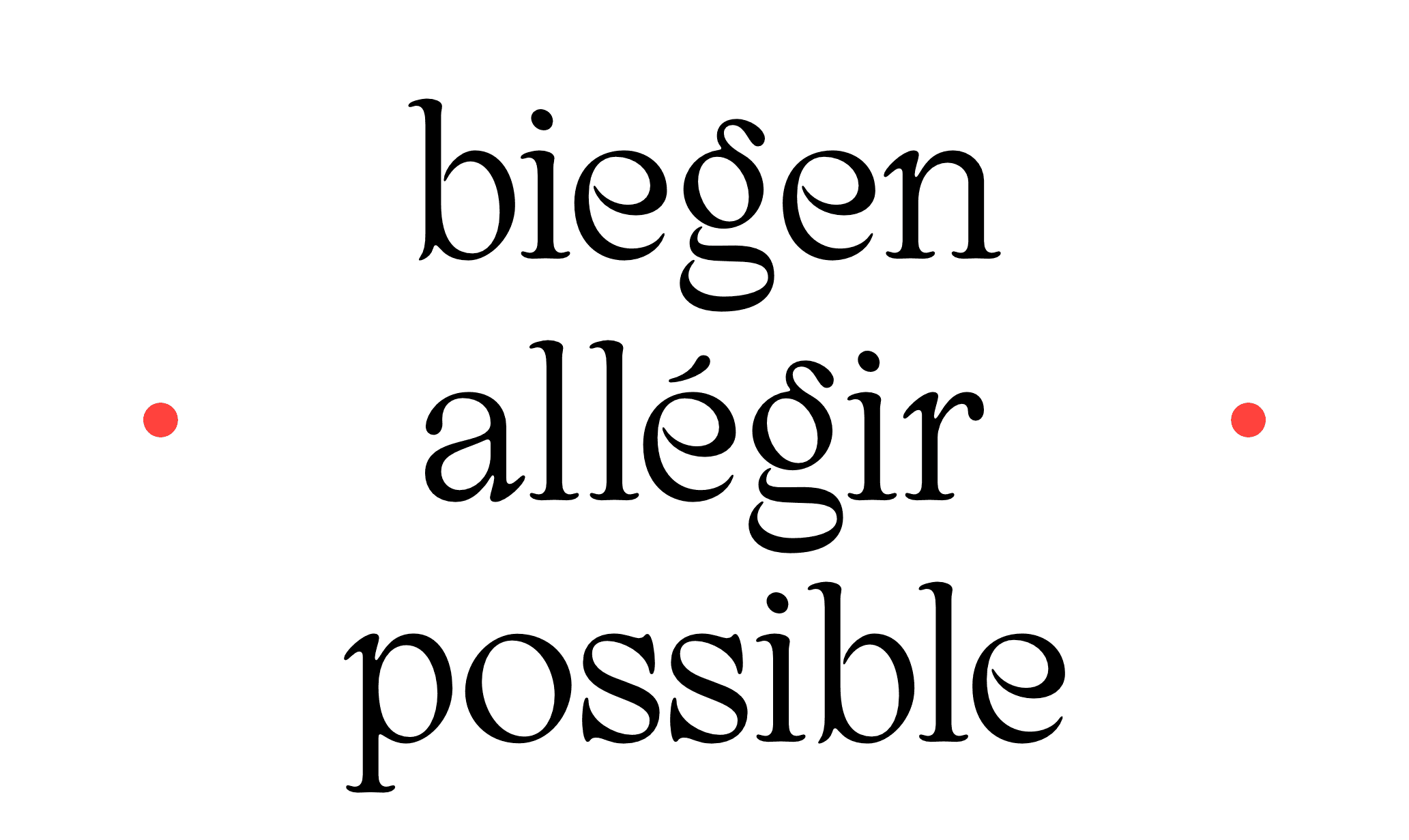
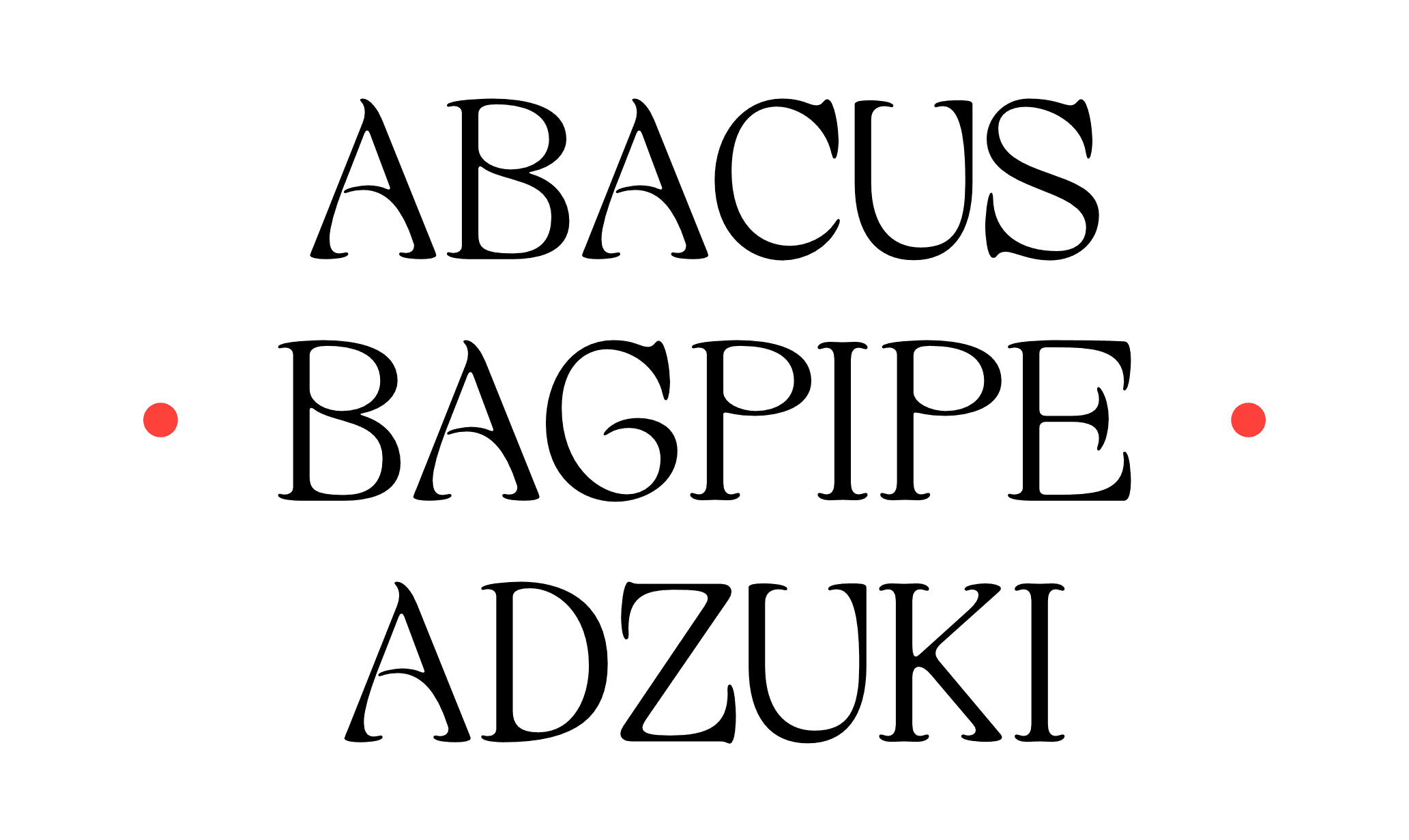
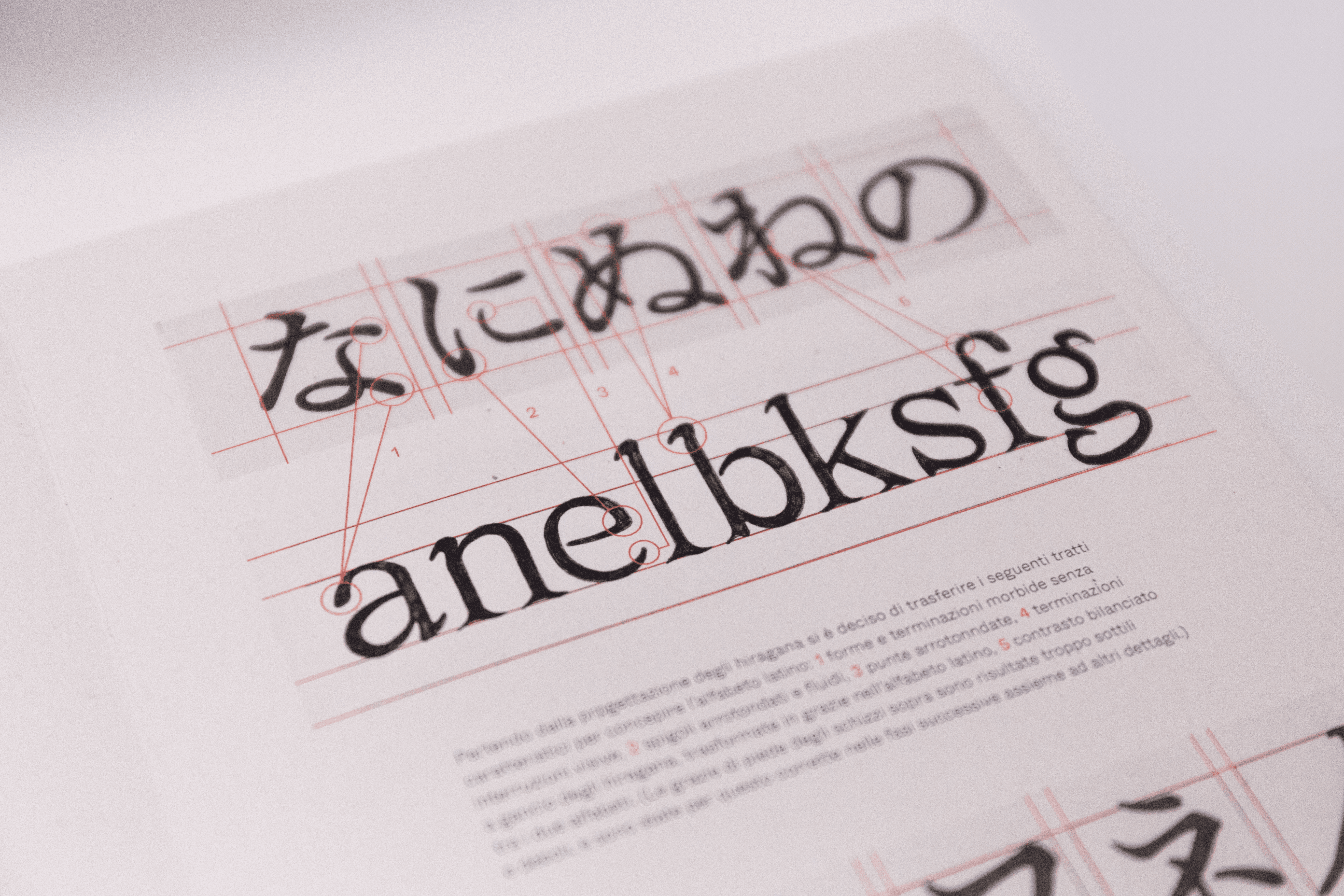
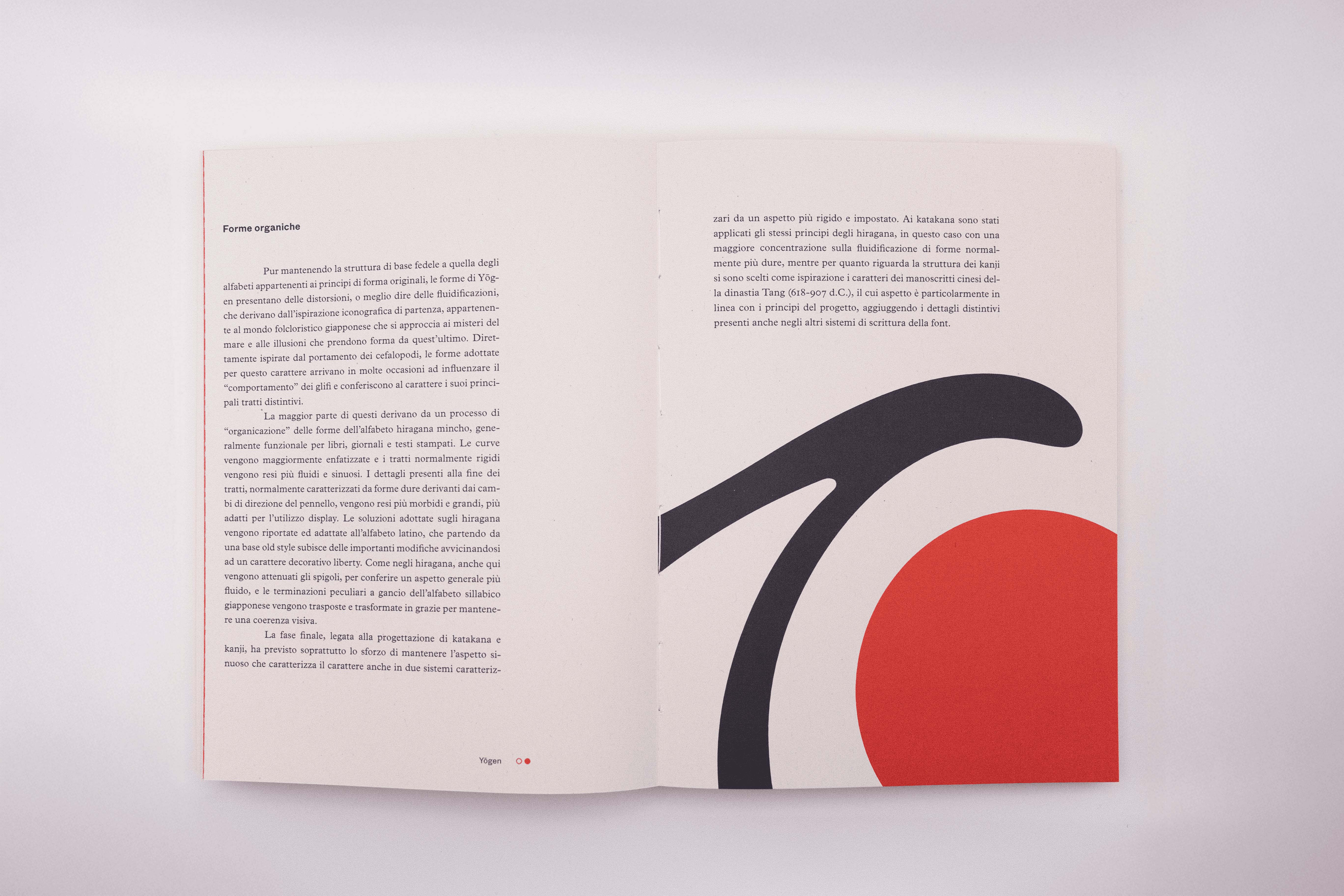
The typeface comprises Latin characters together with hiragana, katakana, and a limited selection of kanji, allowing for a focused yet functional representation of the Japanese writing system. The design process began with a comparative analysis of the structural, rhythmic, and visual relationships between Japanese and Latin scripts, with the aim of identifying recurring formal principles that could establish continuity across the two systems.
The fluid forms of hiragana became the starting point for the typeface’s visual identity, drawing inspiration from the stylised depictions of octopuses found in ukiyo-e prints. These curved and dynamic shapes define the initial design logic and are subsequently adapted to the remaining scripts—katakana, kanji, and the Latin alphabet—while preserving the structural characteristics specific to each writing system.
Beyond the formal investigation, the project was conceived as a decorative display typeface intended for use in museum, exhibition, and cultural communication contexts. Through this application-oriented approach, the thesis explores typography not only as a writing tool, but also as a medium capable of communicating and translating aspects of cultural heritage across languages and audiences.